GI or BI pipe: which to use.
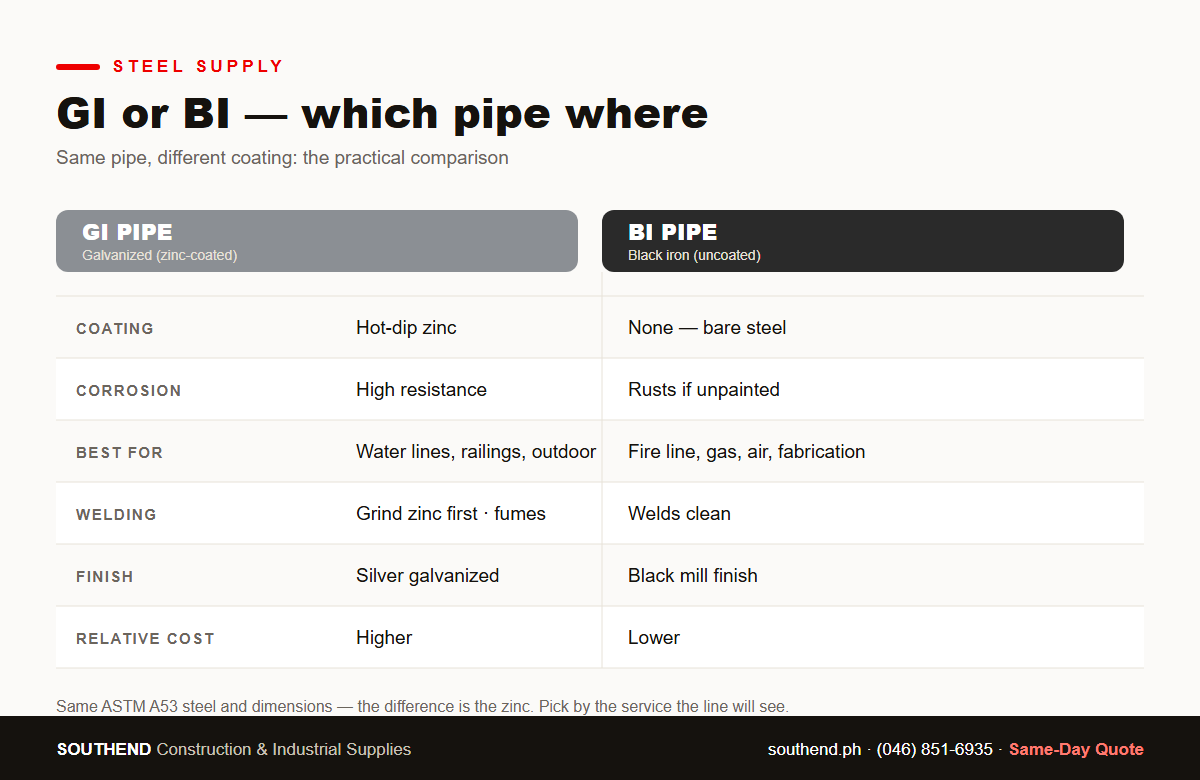
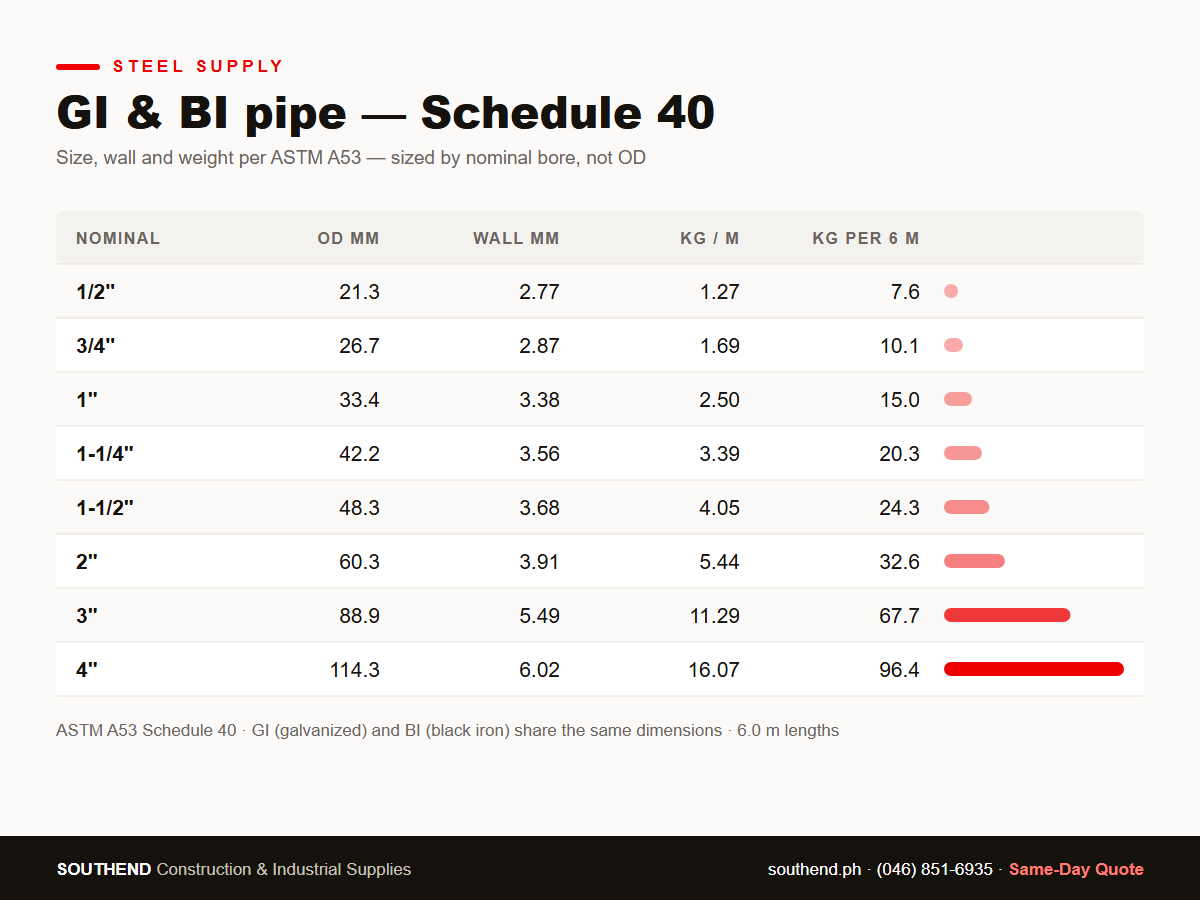
Same ASTM A53 steel, same dimensions — the difference is the zinc. GI is hot-dip galvanized for corrosion; BI is bare steel that welds and paints cleanly. Pick by the service the line will see. Sizes and weights for both are on the GI & BI pipe page.
Choose by application
| Application | Use | Why |
|---|---|---|
| Water lines | GI | Zinc resists rust inside and out; threads well |
| Fire sprinkler / standpipe | BI, Sch 40, painted red | Standard for wet systems; per fire-protection design |
| LPG / gas lines | BI, per code | Gas work specifies black steel; schedule per the design |
| Welded structure — canopy, truss, frame | BI, then paint | Welds clean; no zinc fumes, no burned coating |
| Railings, fence posts, outdoor | GI | Weather exposure; little or no welding |
| Scaffolding | GI, 1½" Sch 40 | The common site standard |
| Compressed air lines | GI or BI | GI common; either works at shop pressures |
Where a mechanical, plumbing or fire-protection design exists, the design and the applicable code govern — this table is the default, not the override.
Schedule 20, 40 or 80
- Schedule 40 — the standard wall. Plumbing, sprinkler, structural and general work.
- Schedule 20 (light wall) — fences, railings, light frames. PH "S20" is a commercial light wall, not an ASME schedule at these sizes — confirm actual thickness before structural use.
- Schedule 80 — heavy wall for higher pressure and threaded gas/steam work.
Welding galvanized pipe
It can be done, but treat it as the exception: grind the zinc back at the joint, weld with ventilation — zinc fumes cause metal fume fever — then coat the weld with zinc-rich paint. Burned galvanizing no longer protects, so a heavily welded GI assembly ends up worse than BI properly painted. Rule of thumb: lots of welding, use BI and paint it; little or no welding outdoors, use GI.
Pipe or tubular
Steel tubular is the thin-wall ERW section (about 1.2–1.5mm, square, rectangular or round) used for gates, fences and light frames — lighter and cheaper per meter. Pipe carries the schedule wall for pressure and load. If it holds water, gas or weight, it's pipe; if it's a frame, tubular usually does the job — see steel tubular.
Common questions
Which pipe for a house water line?
GI is the traditional choice — the zinc coating protects against rust inside and out. Many plumbers now run PPR or HDPE instead; GI still wins where the line is exposed, needs mechanical strength, or ties into existing threaded GI.
Which pipe for fire sprinkler lines?
BI Schedule 40, painted red, is the standard for wet sprinkler and standpipe systems. Follow the fire-protection design and the Fire Code — galvanizing is not required indoors and the design may specify otherwise.
Can you weld GI pipe?
Yes, but grind the zinc off the joint first, ventilate — zinc fumes cause metal fume fever — and touch up the finished weld with zinc-rich paint. For assemblies with a lot of welding, BI then paint is the cleaner and safer route.
Does GI pipe rust?
Eventually. Zinc protects sacrificially, so service life depends on exposure — decades indoors, less outdoors or in contact with soil. Cut ends and freshly cut threads are the weak points; coat them with zinc-rich paint.
GI tubular or GI pipe for a fence?
Tubular (thin-wall, about 1.2–1.5mm, square or round) is the usual choice for fence frames and panels — lighter and cheaper. Use pipe for posts and anything carrying load or pressure, where the heavier schedule wall matters.
Related
Standards referenced. Standards: ASTM A53 / ASME B36.10M (pipe dimensions & schedules, as adopted in PH practice) · National Plumbing Code of the Philippines & Fire Code (RA 9514) for line applications. Applications are general guidance — follow the mechanical / fire-protection design.
Reviewed July 2026 · Southend Construction & Industrial Supplies, Dasmariñas, Cavite